
Skip to content
ByteScaffold
Shopware Development

Custom Shopware Development

Custom checkout rules, pricing logic, and catalog workflows for stores where the standard Shopware configuration doesn't match how the business actually operates.

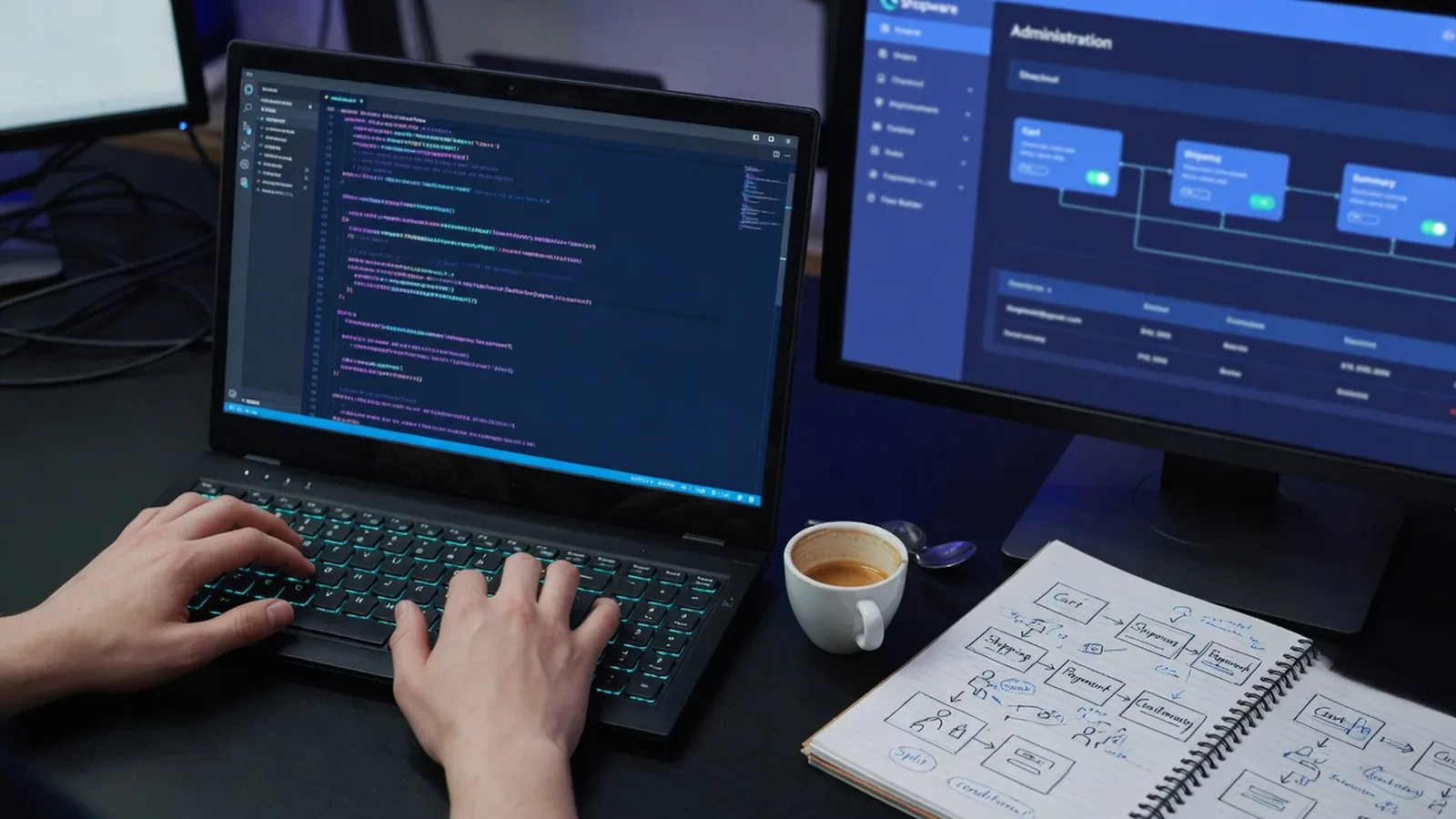
Developer writing custom store logic on a dark IDE with checkout-flow sketches on a notebook beside the keyboard
Laptop and studio monitor showing a premium fashion ecommerce storefront on a marble desk

Where standard Shopware configuration actually stops

Shopware's rule builder handles a lot of pricing and promotion logic out of the box, but it hits real limits on volume-based tiers, contract-specific pricing, or rules that depend on data outside the standard product model. That's usually the first thing custom development gets called in for.

Checkout is the other common gap — multi-step approval flows, non-standard payment terms, or validation logic tied to a customer's account status rather than the cart contents. None of that is configurable through the admin; it has to be built.


Hand placing a glowing blue acrylic module onto a circuit board, illustrating a plugin architecture

How custom logic gets built without breaking on updates

Everything is written as a plugin against Shopware's public service and event system, not as an edit to core files. That distinction matters because core edits get silently overwritten or conflict on the next Shopware update; plugin code built on public hooks doesn't.

We also test custom logic against your actual catalog and order data before launch, not a clean demo dataset. Edge cases in real product data are where custom pricing and checkout logic most often break in production.

What's included

Custom pricing and discount logic beyond rule builder limits
Non-standard checkout flows and validation steps
Custom product/variant data models for unusual catalogs
B2B-specific workflows: quote requests, approval chains, net terms
Custom order states and fulfillment logic
Performance work on stores with large or complex catalogs
How we work

How a custom shopware development project runs

01

Discover

Map the actual business rule — what it needs to do that the standard admin can't express.

02

Build

Implemented as a plugin or service, not a core file edit, so it survives platform updates.

03

Integrate & test

Tested against edge cases in your real catalog and order data, not a demo dataset.

04

Launch

Rolled out with monitoring on the specific logic path, since custom rules are where regressions hide.

Why us

Why work with us on custom shopware development

Laptop and studio monitor showing a premium fashion ecommerce storefront on a marble desk

Built as plugins, not core edits

Custom logic hooks into Shopware's public APIs so it keeps working after a platform upgrade instead of getting silently overwritten.

Configuration checked first

We verify the rule builder and B2B Suite genuinely can't do it before writing custom code — less code to maintain if configuration already solves it.

Tested on your real data

Custom pricing and checkout logic gets tested against your actual catalog and order history, where edge cases actually show up, not a demo dataset.

B2B workflow experience

Quote requests, approval chains, and net-terms logic are workflows we've built repeatedly, not a first attempt at your expense.

FAQ

Questions about custom shopware development

We check the rule builder, B2B Suite, and Store plugin ecosystem first. If one of those covers it, we say so — custom code is more to maintain, and we don't build it when configuration already does the job.

Ready to start your custom shopware development project?

Tell us about your goals — we'll reply within one business day with next steps.